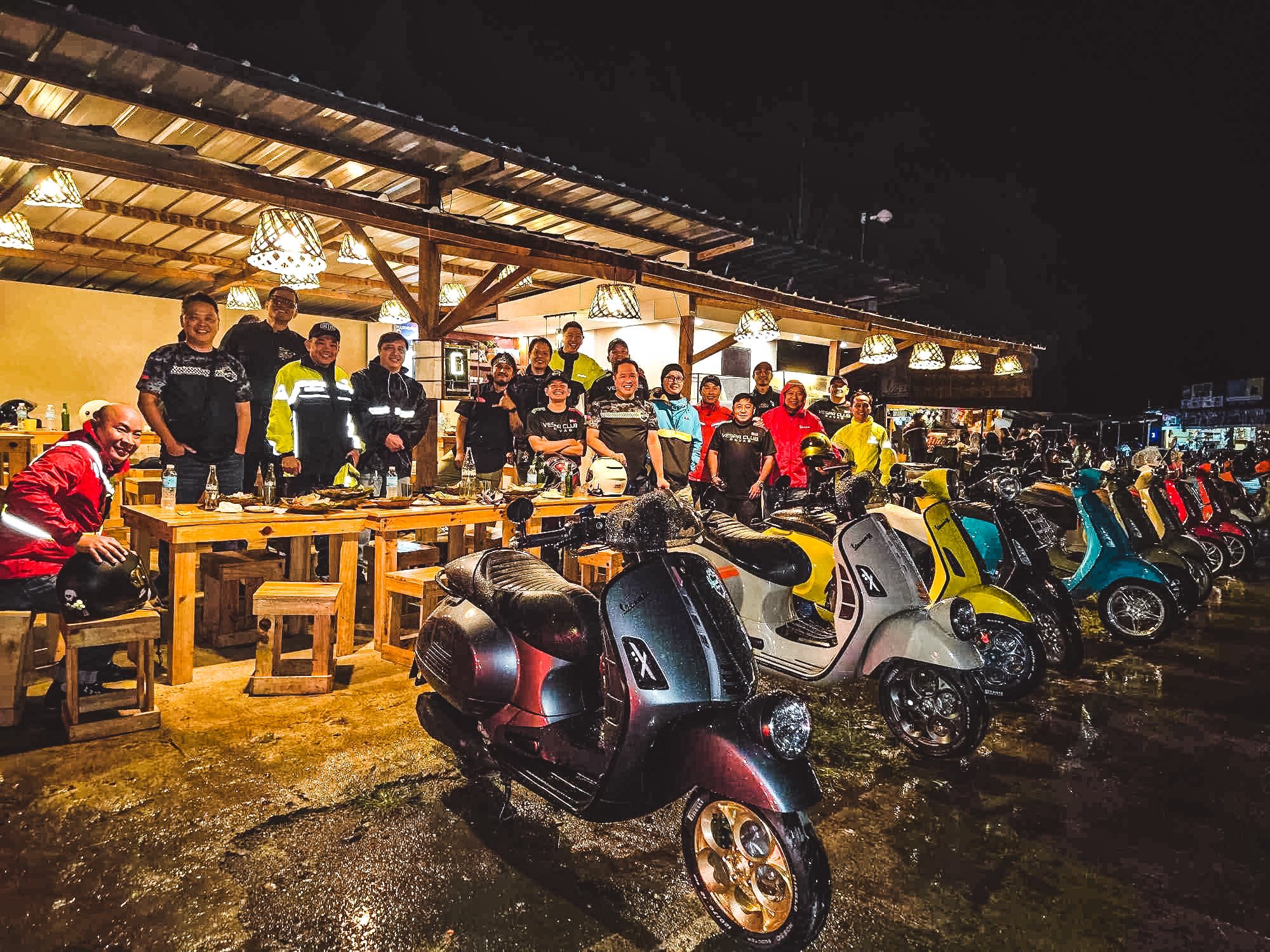
The Philippines is not Italy. Its roads are not the wide cobblestone piazzas of Rome or the olive-lined highways of Tuscany. Its climate bears no resemblance to the mild Mediterranean. And yet, in cities from Manila to Cagayan de Oro, from Cebu to Davao, the Vespa has found a home so natural and so complete that it is now difficult to imagine Filipino scooter culture without it. This is the story of how an Italian engineering marvel, born in the rubble of post-war Europe, became a genuinely Filipino icon — and how Vespa Club Davao represents the living expression of that story in Mindanao.
The Italian Origin: A Machine Born from Necessity
To understand why the Vespa resonates so deeply across cultures, you need to understand what it was designed to be. In 1945, Italy lay in economic and physical ruin. The Piaggio company — which had been producing aircraft during the war — needed to pivot rapidly to peacetime production that would address immediate civilian needs. Enrico Piaggio commissioned aeronautical engineer Corradino D'Ascanio to design a simple, affordable, practical vehicle that ordinary Italians could use to rebuild their lives.
D'Ascanio had no background in motorcycles — and this turned out to be the decisive advantage. Without the constraints of conventional motorcycle thinking, he created something genuinely original: a vehicle with a pressed-steel monocoque body (borrowed from aircraft construction), a step-through design that allowed women to ride in skirts, front and rear suspension on both wheels, and a covered engine that protected the rider's clothing from oil and grime. When Enrico Piaggio saw the prototype in 1946, he said "Sembra una vespa" — it looks like a wasp. The name stuck.
The Vespa was an immediate and enormous success. It was affordable enough for ordinary Italians, practical enough for daily use, and attractive enough to carry genuine aspirational appeal. Within a decade, it had spread across Europe and beyond, appearing in films (most memorably in William Wyler's Roman Holiday, where Audrey Hepburn and Gregory Peck ride a Vespa through Rome), in fashion photography, and in the daily lives of millions of riders across the world.
Vespa's Arrival in the Philippines: The Post-War Decades
1950s – 1970s
The Vespa's arrival in the Philippines followed the same pattern it followed everywhere: first among the affluent, then spreading into the middle class as prices gradually became accessible. In the 1950s and 1960s, Vespas were status symbols — products of a glamorous European world that Filipinos were connected to through film, magazines, and the cultural influence of an American occupation that had expanded Philippine horizons considerably. To own a Vespa in Manila in 1958 was to own a piece of international style.
The 1960s and 1970s saw Vespa culture deepen in the Philippines as the machines became more affordable and more widely distributed. Filipino riders discovered what Italian, French, and British riders had already learned: the Vespa was not just a practical vehicle but a genuine riding experience with a character of its own. The distinctive exhaust note, the precise handling, the way the steel body responded differently from the Japanese alternatives beginning to flood the market — all of these qualities gave Vespa a loyal following that transcended mere transportation choice.
By the 1970s, the Philippine market was being reshaped by the entry of Japanese manufacturers — Honda, Yamaha, Suzuki — who offered motorcycles and scooters at prices and with service infrastructure that Vespa could not match. This was the period when the Vespa began its transition from mainstream choice to connoisseur's choice — a transformation that would ultimately strengthen rather than weaken its cultural significance.
The Classic Era and the Collector's Passion
1980s – 2000s
The 1980s and 1990s saw the Vespa occupy a distinctive cultural position in the Philippines: not the rational choice for everyday transportation, but an object of passion and pride for those who understood what made it special. During this period, the classic Vespa community — riders who maintained, restored, and celebrated the older two-stroke models from the 1950s through the 1970s — developed into a genuine subculture with its own knowledge systems, social networks, and aesthetic sensibility.
Classic Vespa restoration became a serious pursuit in the Philippines during this era. Riders would track down original parts through personal networks, import from specialist suppliers in Europe, and share technical knowledge within tight-knit communities that had no formal institutional structure but tremendous depth of expertise. The Philippines' tropical climate created particular challenges — rust, oxidation, and the harsh UV environment all work against the long-term preservation of steel-bodied machines — and Filipino restorers developed techniques specific to these conditions that were genuinely innovative.
The emotional dimension of classic Vespa ownership runs particularly deep in Filipino culture. Vespas from the 1960s and 1970s are living connections to parents and grandparents — machines that carried previous generations through their own lives, that appear in old family photographs, that represent a specific moment in Philippine social history. Restoring a vintage Vespa in the Philippines is often an act of familial memory as much as mechanical passion.
This collector culture gave Vespa an unusual resilience in the Philippine market during periods when the brand's commercial presence was limited. Even when Piaggio products were difficult to find in dealerships, the enthusiast community maintained the brand's flame — and created a foundation of deep knowledge that made the Vespa's eventual commercial revival all the more robust.
The Modern Renaissance: Piaggio's Return and the GTS Generation
2010s – Present
The 2010s saw Piaggio make a serious recommitment to the Philippine market, establishing authorised dealerships in major cities and introducing the modern four-stroke GTS and Primavera lines that combined Italian design heritage with contemporary engineering standards. This reinvestment coincided with broader shifts in Filipino consumer culture — a growing urban middle class with rising disposable income, increasing interest in lifestyle products with authentic heritage, and a social media ecosystem that made the Vespa's extraordinary visual character more commercially potent than ever.
The results have been striking. Vespa sales in the Philippines have grown substantially through the 2010s and into the 2020s. More importantly, the demographic profile of Filipino Vespa buyers has shifted — the machine now attracts not only mature enthusiasts with long histories in the community but also younger riders in their twenties and thirties who are making the Vespa their first serious scooter purchase. This generational broadening is one of the most encouraging developments in Philippine Vespa culture, ensuring that the community's depth of knowledge and passion is transmitted forward rather than aging in place.
Social media has been particularly significant in this revival. Instagram and Facebook have created visual cultures around Vespa ownership that amplify the machine's aesthetic appeal enormously. A beautifully photographed Vespa in Davao City's urban landscape — against the backdrop of its distinctive architecture, its busy streets, its lush Mindanao geography — generates engagement that no conventional advertising could match. Filipino Vespa riders have developed genuine expertise as photographers and content creators, and the images they produce have contributed substantially to the brand's contemporary appeal in the Philippines.
The Club Structure: Community as Cultural Infrastructure
Perhaps the most distinctive feature of Filipino Vespa culture — and the aspect that most clearly distinguishes it from mere consumer preference — is the richness and depth of its club structure. Vespa clubs exist throughout the Philippines, from Luzon to Visayas to Mindanao, and they represent one of the country's most vibrant recreational association networks.
Philippine Vespa clubs typically function as genuine community organisations with formal structures, elected leadership, regular meetings, coordinated events, and genuine mutual support among members. This organisational formality reflects the Filipino cultural value of bayanihan — the tradition of communal unity and cooperation — expressed through the specific context of scooter enthusiasm. When a club member has a mechanical problem far from home, fellow members mobilise to help. When a member faces personal difficulties, the club community rallies. The shared passion for Vespa is the entry point, but what sustains these clubs is something deeper: the Filipino instinct for community and mutual care.
The club network also serves as an educational infrastructure that has no formal equivalent in the Philippine Vespa ownership experience. Technical knowledge about Vespa maintenance, repair, parts sourcing, and restoration flows through the club network in ways that would be impossible to replicate through any commercial channel. New owners who join a Vespa club gain access immediately to decades of accumulated practical wisdom — a resource that has concrete monetary value in terms of avoided repair costs and informed purchasing decisions.
Vespa Club Davao: Mindanao's Contribution to Philippine Vespa Culture
Vespa Club Davao was founded in August 2018 by five Davao City residents who shared a passion for Vespas and a desire to build the kind of community around their machines that they had seen in other parts of the Philippines and internationally. The founding context is important: VCD was not created in response to commercial opportunity or organisational ambition. It was created because five people loved Vespas and understood that riding together was better than riding alone.
By 2026, VCD has grown to 80 members and has established itself as one of Mindanao's most active and community-minded Vespa organisations. Its programme of activities reflects both the depth of its members' passion for Vespas and the breadth of their interests beyond the machines themselves. Group rides through Davao City and across Mindanao's varied geography provide the core riding experience. The annual VCD Golf Tournament brings the community together in a different context and extends its reach into Davao's broader social and professional networks. The VCD Cares charity programme — with its support for the SPMC Burn Unit, the Children's Cancer Institute, and the Maharlika Charity Foundation — gives the club's activities a social dimension that its members find genuinely meaningful.
VCD's membership is deliberately diverse. Professionals, entrepreneurs, healthcare workers, educators, artists, retirees, and young riders in their early twenties all ride together. This diversity is a source of the club's strength — it means that VCD's collective knowledge, experience, and social reach encompasses far more than any homogeneous group could manage. The common thread is not demographic similarity but genuine shared values: a passion for Vespas, a commitment to community, and a conviction that riding together is one of the good things in life.
Vespa as Filipino Style: The Aesthetic Dimension
The Vespa's visual presence in Philippine culture deserves its own consideration. The machine is, by any objective measure, one of the most beautiful pieces of industrial design ever created — a quality that has been recognised consistently by design institutions, museums, and critics since its introduction in 1946. In the Filipino visual environment, with its particular qualities of light, color, and spatial character, the Vespa looks extraordinary.
Filipino Vespa owners have developed a distinctive aesthetic sensibility around their machines that draws on both Italian design heritage and local visual culture. Customisation choices reflect this dual influence: Italian racing colors and classic Piaggio palette choices mix with color combinations specific to Filipino taste; vintage accessories and period-correct details coexist with modifications that reflect local riding conditions and preferences. The result is a Filipino Vespa aesthetic that is genuinely original — recognisably part of the global Vespa family but distinctively shaped by its Philippine context.
The Vespa's relationship with Filipino fashion culture is also worth noting. The step-through design — originally created by D'Ascanio to accommodate women in skirts — makes the Vespa particularly compatible with Filipino dress conventions in ways that conventional motorcycles are not. The machine's proportions and visual character also make it an effective personal style statement in a culture that places significant value on personal presentation. Riding a Vespa in the Philippines carries a specific set of associations — sophistication, individuality, aesthetic discernment — that its Japanese alternatives, however practically excellent, do not.
Vespa and Filipino Road Culture: Navigating the Urban Reality
Filipino road conditions present Vespa riders with a set of challenges that are quite different from those faced by riders in the machine's country of origin. Italian roads, for all their character, do not prepare you for Davao City's traffic dynamics, its occasional flooding, its road surfaces that range from perfectly maintained to severely deteriorated, or the particular challenges of riding in a tropical climate with heat and humidity that Italian weather rarely replicates.
Filipino Vespa riders have adapted their machines and their riding practices to these realities in ways that represent genuine innovations in Vespa ownership. Maintenance schedules are adjusted for tropical conditions — more frequent attention to cooling, more aggressive rust prevention, particular care with electrical systems in a high-humidity environment. Accessory choices reflect local needs: quality rain gear is essential in Mindanao's wet seasons, luggage solutions are chosen for urban practicality rather than European touring aesthetics, and lighting upgrades address the particular challenges of Filipino night riding.
The VCD community has been particularly active in developing and sharing this Philippines-specific Vespa knowledge. Members who have ridden their machines across Mindanao's varied geography — from Davao City's urban grid through the agricultural roads of the hinterland to the coastal routes of the peninsula — have accumulated practical knowledge about how Vespas perform in these conditions that is not available from any manufacturer's documentation or European ownership experience. This local knowledge is a genuine cultural contribution: Filipino riders teaching the world how to ride Vespa in the Philippines.
The Social Role of Vespa: Community Beyond the Machine
What makes Vespa culture in the Philippines genuinely significant — beyond its commercial dimensions and its aesthetic appeal — is the social infrastructure it has created and sustains. The club network, with its tens of thousands of members across the archipelago, represents one of the country's most vibrant non-professional associational communities. These are people brought together by a shared passion who have built genuine friendships, support networks, and social capital that extends far beyond their machines.
The charity dimension of Philippine Vespa club culture is particularly worth highlighting. VCD Cares is not unique — many Philippine Vespa clubs have active charity programmes, and the culture of charitable giving and community service is deeply embedded in the Vespa club tradition throughout the country. This is not marketing or image management; it is a genuine expression of the values that bring Vespa club members together and that they choose to express collectively. The machine is the occasion; the values are the substance.
There is also an intergenerational dimension to Philippine Vespa culture that has no equivalent in most other recreational communities. Classic Vespa ownership and restoration create explicit connections between generations — fathers and sons restoring machines together, grandparents sharing knowledge about machines they rode in their youth, older riders mentoring younger ones in both mechanical skills and riding traditions. This intergenerational character gives Philippine Vespa culture a depth and continuity that many more recently arrived consumer cultures lack.
The Future of Vespa Culture in the Philippines
The trajectory of Vespa culture in the Philippines is strongly positive. The generational renewal already underway — with younger riders entering the community in growing numbers — ensures continuity. The growing commercial infrastructure of authorised dealerships and parts supply makes ownership more accessible than it has been at any point in Philippine Vespa history. The social media environment continues to amplify the machine's visual appeal and connect riders across the archipelago in ways that were impossible a decade ago.
For VCD specifically, the future involves building on the foundation established in its first eight years: deepening the community, extending the reach of VCD Cares, developing the ride programme across more of Mindanao's extraordinary geography, and serving as a welcoming entry point for the next generation of Davao City Vespa riders. The club's founding principle — that every Vespa owner deserves a community — remains as relevant in 2026 as it was in 2018, and the club's experience of putting that principle into practice gives it a strong foundation for the years ahead.
The Vespa itself will continue to evolve — Piaggio's investment in electric versions of its most iconic models signals a future in which the machine's design heritage is maintained while its engineering adapts to changing environmental and regulatory realities. Filipino Vespa culture will evolve with it, as it has always evolved: maintaining its core values and community character while adapting to the changing conditions and opportunities of the Philippine market and society.
Frequently Asked Questions
When did Vespa become popular in the Philippines?
Vespa first became popular in the Philippines in the 1950s and 1960s, following its global expansion from its 1946 Italian origin. It was initially a status symbol among the affluent, gradually becoming more accessible through the 1960s and 1970s. The machine has enjoyed a significant modern revival since the 2010s with Piaggio's recommitment to the Philippine market and the introduction of the contemporary GTS and Primavera lines.
How many Vespa clubs are there in the Philippines?
Vespa clubs exist throughout the Philippines, from Luzon to Visayas to Mindanao, with communities in every major city and many provincial centres. The total number of registered Vespa club members across the Philippines numbers in the tens of thousands. VCD is one of Mindanao's most active clubs, with 80 members as of 2026.
Is Vespa a good choice for Filipino roads?
Yes, with appropriate preparation and expectations. The Vespa's steel monocoque construction makes it more durable against urban hazards than plastic-bodied alternatives. Its ground clearance and suspension are adequate for most Philippine urban road conditions. In areas with extremely poor road surfaces or very frequent flooding, riders should evaluate the specific local conditions carefully. The VCD community is an excellent resource for Philippines-specific ownership guidance.
What makes Vespa Club Davao different from other scooter clubs?
VCD distinguishes itself through the combination of its active riding programme, its genuine community depth, and its commitment to charitable giving through VCD Cares. The club is deliberately inclusive — welcoming riders of all models, ages, and experience levels — and its diverse membership creates a richer community than a more demographically homogeneous club would. VCD's eight years of consistent activity have built a foundation of trust and shared experience that is genuinely valuable to its members.
Conclusion: A Local Legend with Global Roots
The Vespa's journey from a post-war Italian necessity to a Filipino cultural icon is one of the more remarkable stories in the global history of consumer objects. It is a story about how great design transcends geography, how community forms around shared passion, and how a machine can become a vehicle for values that extend far beyond its mechanical function.
In Davao City, Vespa Club Davao represents the living expression of this story. Its 80 members are not merely scooter enthusiasts — they are participants in a cultural tradition that connects them to a global community of riders, to a specific Italian heritage, and to each other in ways that their machines make possible but their values sustain. The Vespa is the occasion. The community is the point. And the community, in VCD's case, is something worth being part of.